

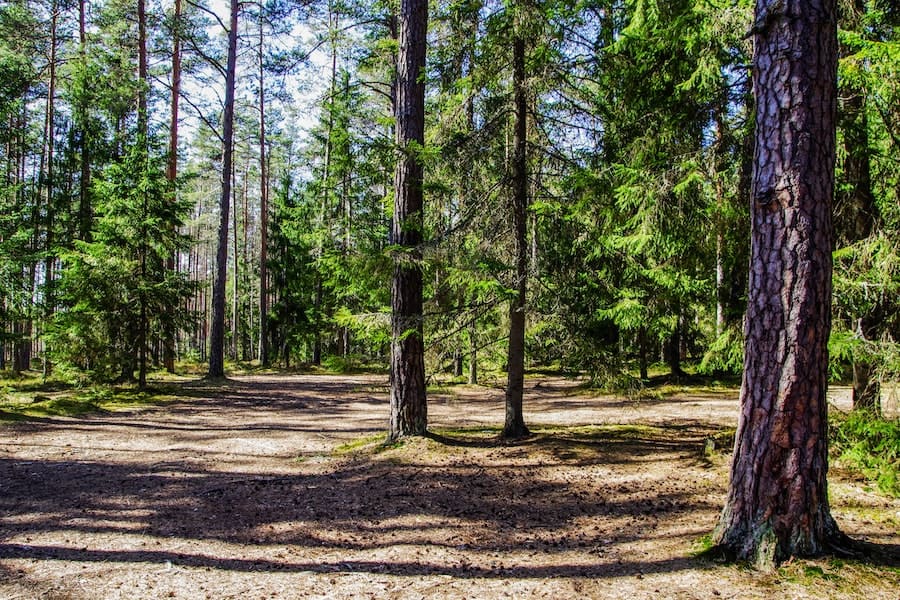
The piney woods ecoregion is a diverse region of forests, rivers, and wetlands that stretches from Virginia to Texas. The topography, or landscape features, of this area, are varied due to its location between the Appalachian Mountains and the Coastal Plain. The Piney Woods ecoregion includes rugged hills and stream valleys with sandy soils and scattered small peaks known as “heights”. Areas with flat terrain support occasional stands of vast longleaf pines. Many of these valleys have been cleared for agriculture and are now being reclaimed by second-growth forests and shrubbery. Related Reading: What is the Climate of the Pineywoods Ecoregion?
What is the topography of the pineywoods ecoregion?
The Pineywoods is a region in eastern Texas and southwestern Louisiana that is underlain by a rich accumulation of lignite coal and limestone. The forest is dominated by pine but also includes hardwood species. The area has abundant water resources, and the resulting wetlands are important habitats for waterfowl, fish, and reptiles. The region encompassing the Pineywoods ecoregion is rich in resources and had a long history of use by indigenous peoples before being settled by European Americans in the 19th century.
What Is The Importance Of The Pineywoods?
1. Important Habitat
The piney woods is a very important habitat for many species. The region encompasses the largest and last remaining old-growth longleaf pine-hardwood forest in North America. The area is home to many endangered species, including the red-cockaded woodpecker, red-cockaded woodpecker, whooping crane, and Louisiana black bear.
2. Timber
The Pineywoods region contains valuable hardwood timber and is an important producer of pulpwood and lumber. In addition to sawmills, the area also has paper mills that produce large amounts of pulp for paper products such as newsprint. Many small towns are supported by the timber industry because of its large economic impact on the area’s economy.
3. Agriculture
The Pineywoods region has been cleared for agriculture and is an important producer of livestock, poultry, and cotton. The area has also been developed for oil and natural gas production in recent decades.
4. Water Resources
The Pineywoods region contains rich deposits of lignite coal and limestone, and the area’s abundant water resources have resulted in large areas of wetlands important for waterfowl, fish, and reptiles. The region also contains valuable mineral resources, including lignite coal and natural gas.
5. Tourist Destination
The Pineywoods region is an important tourist destination for hunters, fishermen, birdwatchers, and other outdoor enthusiasts. Many people come to the area to enjoy its abundant wildlife and scenery.
6. Cultural Heritage
The Pineywoods region is rich in cultural history and was home to many Native American tribes before the arrival of European Americans in the 19th century. The area has been settled for more than 200 years, and many small towns have developed along the rivers, streams, and bayous of the region.
7. Tourism
The Pineywoods region is an important tourist destination for outdoor enthusiasts who come to enjoy its abundant wildlife and scenery. The area is also home to many small towns that have developed along rivers, streams, and bayous.
Types Of Landscape In The Pineywoods Ecoregion
1. Coastal prairie
The Pineywoods region is located near the Gulf of Mexico, and the coastal prairie that once covered the area has been cleared for development and agriculture.
2. Cypress-tupelo swamp
The Pineywoods region contains many cypress-tupelo swamps that were once important for lumber production and as a source of tupelo gum, which was used to make chewing gum in the early 20th century.
3. Bottomland hardwood forest
The bottomland hardwood forest is one of the most important natural resources of this region, and much of it has been cleared for development and agriculture. Some areas have been preserved through national parks such as Big Thicket National Preserve in Texas and Louisiana or through conservation easements held by The Nature Conservancy or other organizations.
4. Upland hardwood forest
The upland hardwood forest is one of the most important natural resources in the Pineywoods region, and much of it has been cleared for development and agriculture. Some areas have been preserved through national parks such as Big Thicket National Preserve in Texas and Louisiana or through conservation easements held by The Nature Conservancy or other organizations.
5. Cypress-tupelo swamp
The cypress-tupelo swamp is one of the most important natural resources in the Pineywoods region, and much of it has been cleared for development and agriculture. Some areas have been preserved through national parks such as Big Thicket National Preserve in Texas and Louisiana or through conservation easements held by The Nature Conservancy or other organizations.
How You Can Help Protect The Ecoregion?
1. The Nature Conservancy
The Nature Conservancy is one of the largest conservation organizations in the world. Through direct acquisition and land donations, it has preserved over 119 million acres of land in the United States. It also holds land through conservation easements, which restricts the use of a property for conservation purposes.
2. Big Thicket National Preserve
The Big Thicket National Preserve is the largest national preserve in the United States, and it protects several thousand acres of the Pineywoods ecoregion. The preserve contains many threatened and endangered species, such as the red-cockaded woodpecker and black bear.
3. Gulf Coast Prairie Program
The Gulf Coast Prairie Program is a private non-profit organization that conserves land while ensuring that it is available for public use. It works with landowners to establish conservation easements on their properties, which restricts development to protect habitats for endangered species such as the Attwater’s prairie chicken.
4. Houston Audubon Society
Houston Audubon Society is a private non-profit organization that protects the birds and habitats of southeast Texas. It works with landowners to establish conservation easements on their properties, which restricts development to protect habitats for endangered species such as the Attwater’s prairie chicken.
Why Are The Pineywoods Important?
1. Water
The Pineywoods region is the wettest ecoregion in Texas and contains many rivers, bayous, and other wetlands that are important to the water supply of the United States. The region also contains many small lakes that are popular with fishermen.
2. Habitats for Endangered Species
The Pineywoods contain several endangered species, such as the red-cockaded woodpecker, black bear, and Attwater’s prairie chicken. These species live on large tracts of land that have been preserved through conservation easements held by organizations such as The Nature Conservancy or Houston Audubon Society.
3. Economic Development
The Pineywoods region is a major agricultural area in Texas. It produces large amounts of rice, corn, and cotton, and it is also a major producer of timber for the United States. The region is also home to several small cities that are growing rapidly as Houston expands to the east.
Summing Up
The piney woods ecoregion is a diverse region of forests, rivers, and wetlands that stretches from Virginia to Texas. The topography, or landscape features, of this area, are varied due to its location between the Appalachian Mountains and the Coastal Plain. This ecoregion is home to many plants and animals that are rare or endangered, and it is also a source of many important commodities. The piney woods are a temperate mixed forest, with a wide variety of different species. The weather of the ecoregion is warm and humid, and the soil is sandy, making it particularly susceptible to fires.
FAQ’s
1. What is an Ecoregion?
An ecoregion is a large area that contains many smaller ecosystems. There are several types of ecoregions, including desert, grassland, chaparral, and forest. An ecoregion can be further divided into smaller areas called sub-ecoregions, which contain similar plant and animal species. However, each sub-ecoregion is distinct in some way from the others. The piney woods region is a temperate mixed forest ecoregion with many sub-ecoregions.
2. What is an Ecosystem?
An ecosystem is a group of living things and their nonliving environment interacting as a system. A forest ecosystem could include trees, animals like deer and squirrels, parasites like ticks and mites, microbes like bacteria in the soil, fungi in the soil that decompose dead organic matter into nutrients for other organisms to use as food, fungi on trees that help them take up water from the ground up to their leaves where it evaporates into water vapor for other organisms to breathe out as water vapor back into the air.